Third-Party Market Study / Industry Analysis: figures below are contextual external claims, not Productive IT performance results or guarantees. Validate the original source and date before relying on them. The cybersecurity landscape in 2026 faces unprecedented challenges. AI-driven attacks have evolved beyond simple hacking attempts to fully autonomous operations that can scan, exploit, and move through networks without human help.
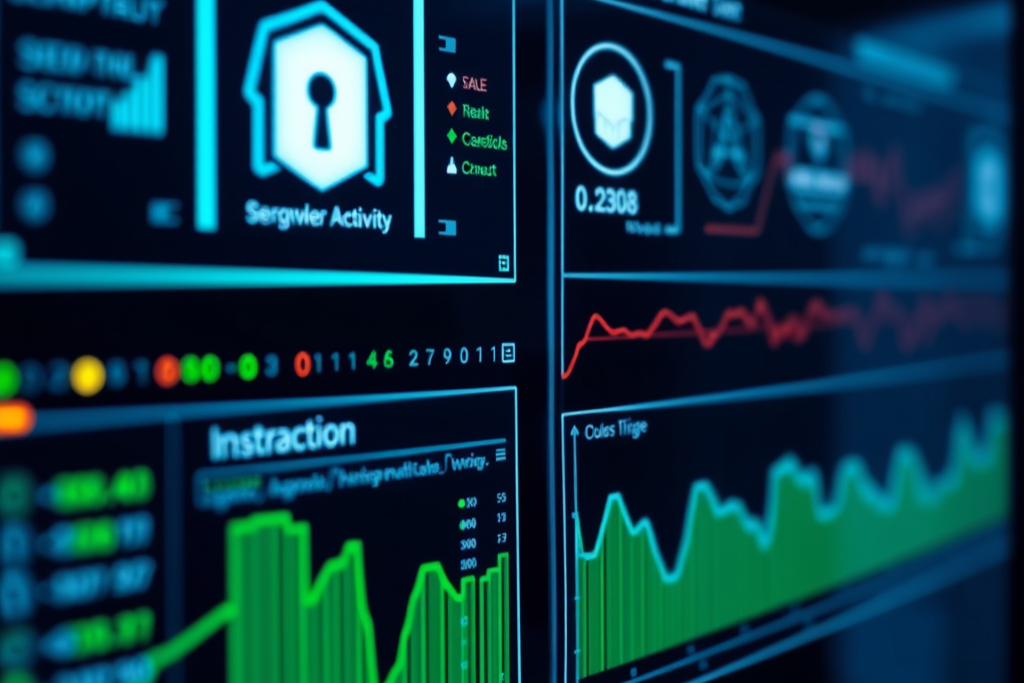
At the same time, geopolitical tensions and supply chain weaknesses increase the risk of breaches that can cripple businesses. For companies aiming to grow and protect their assets, relying on traditional security methods is no longer enough. Instead, embracing automated cybersecurity solutions is essential to stay ahead of these threats. "AI security interface monitoring network activity", "Close-up of AI cybersecurity dashboard in a server room" Why Traditional Cybersecurity Defenses Are No Longer Enough The rise of AI in cyberattacks has changed the rules of the game.
Attackers now use AI agents that can: Autonomously scan networks for vulnerabilities Exploit weaknesses without manual intervention Move laterally across systems to maximize damage These capabilities make attacks faster and harder to detect. Meanwhile, supply chain attacks have surged by 40% year-over-year, targeting weak points in infrastructure that traditional defenses often overlook.
Organizations without AI-driven security platforms face breach costs three times higher than those with modern solutions. Geopolitical conflicts add another layer of risk, with nation-state actors focusing on critical infrastructure. Many companies still depend on legacy security systems designed for manual threat detection and response.
These systems cannot keep pace with automated attacks that operate in real time. This gap leaves businesses exposed and vulnerable. How automated Cybersecurity Solutions Change the Game automated cybersecurity solutions bring intelligence and automation to defense strategies. They continuously analyze network behavior, detect anomalies, and respond to threats faster than human teams alone.
Key benefits include: Real-time threat detection : AI models identify unusual patterns instantly, reducing the window for attackers to cause damage. Automated response : Systems can isolate affected devices or block suspicious activity without waiting for human approval. Predictive analytics : AI forecasts potential attack vectors based on emerging trends and historical data.
Supply chain protection : AI monitors third-party vendors and infrastructure for vulnerabilities before they become entry points. For example, Productive IT’s AI security platform integrates deeply with enterprise infrastructure to provide continuous monitoring and adaptive defense.
This approach helps businesses detect AI-driven reconnaissance and lateral movement early, stopping attacks before they escalate. Building a Strong Security Infrastructure with Productive IT Productive IT focuses on cybersecurity as a core part of business infrastructure, not just a technology add-on.
Their solutions are designed to fit seamlessly into existing systems while enhancing security posture through AI capabilities. Key features include: Scalable AI infrastructure that grows with your business needs Integration with cloud and on-premises environments for comprehensive coverage User-friendly dashboards that provide clear insights without overwhelming IT teams Continuous updates to adapt to evolving AI threats By adopting these automated cybersecurity solutions, businesses can reduce breach costs, improve response times, and protect critical assets against sophisticated attacks.
AI system analyzing network traffic for threats, AI cybersecurity system monitoring enterprise network Practical Steps to Protect Your Business in 2026 To prepare for the evolving cybersecurity landscape, companies should: Assess current security infrastructure to identify gaps against AI-driven threats Invest in automated platforms that offer real-time detection and automated response Train IT teams on AI security tools and threat intelligence Monitor supply chain partners for vulnerabilities and enforce security standards Develop incident response plans that incorporate AI alerts and automated containment For example, a mid-sized manufacturing firm recently integrated Productive IT’s AI security platform.
Within months, the system detected an AI-driven reconnaissance attempt targeting their network. Automated isolation of the affected segment prevented lateral moveme